
Modern Scale in Historic Spaces: What Restoration Gets Right
There's a question that comes up more often than you'd expect in historic preservation circles: how do you make an old building work for the way people live and work today without erasing everything that made it worth saving in the first place? Since joining the Queen Anne Historical Society board, I've found myself sitting with it — drawn in by a growing interest in urban history and how the places we inhabit shape the way we live together over time. The tension between preservation and progress is rarely about the buildings themselves. It's about what we believe places are for.
I've had the opportunity to work on two adaptive reuse projects in Seattle that differ widely in program and scale but share the same underlying philosophy: that modern life and historic fabric are not at odds. They are, when done well, in conversation.
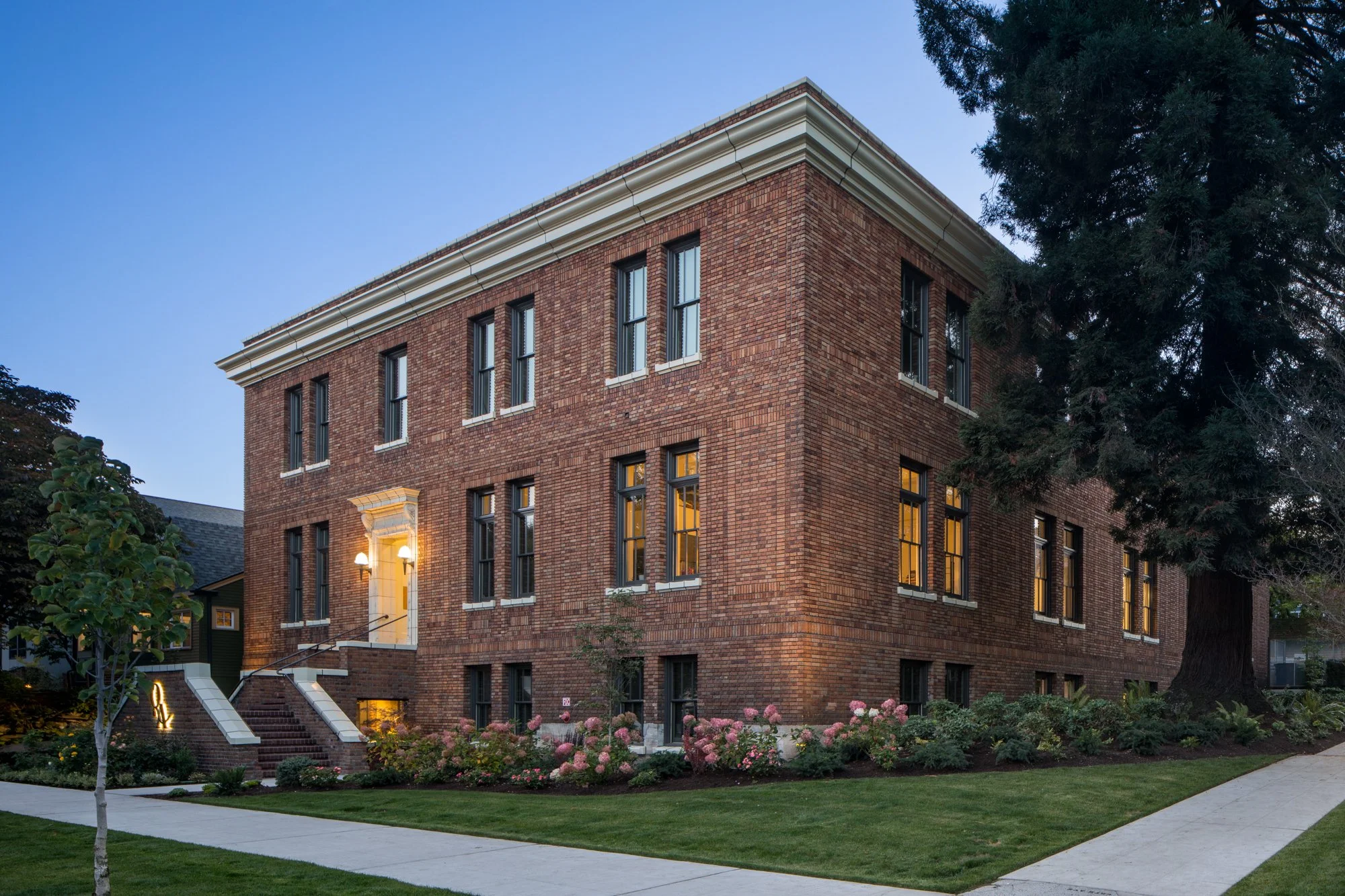
Queen Anne Exchange at Dusk. Photo: Lara Swimmer Photography.
The first is Queen Anne Exchange at 1529 4th Avenue West — a 1921 Pacific Telephone and Telegraph Company building that sat underused for decades after the communications industry moved on. Compact and utilitarian in origin, its bones are anything but ordinary: soaring 15-foot ceilings, 9-foot double-hung windows, original brick and concrete detailing, and soldering niches — recessed workspaces where women technicians once repaired and assembled telephone equipment — still visible within the walls of individual units. The project converted the exchange into 25 residential units, adding a penthouse level with private terraces and a community rooftop overlooking the Seattle skyline. What strikes me is how deliberately the new defers to the old. The penthouse sits back. The windows were rebuilt to mirror the originals — a distinction that matters in preservation, but nearly impossible to detect from the inside. The entry sequence — a brick and terracotta staircase leading to restored corridors — puts you in the building's history before you reach your front door.
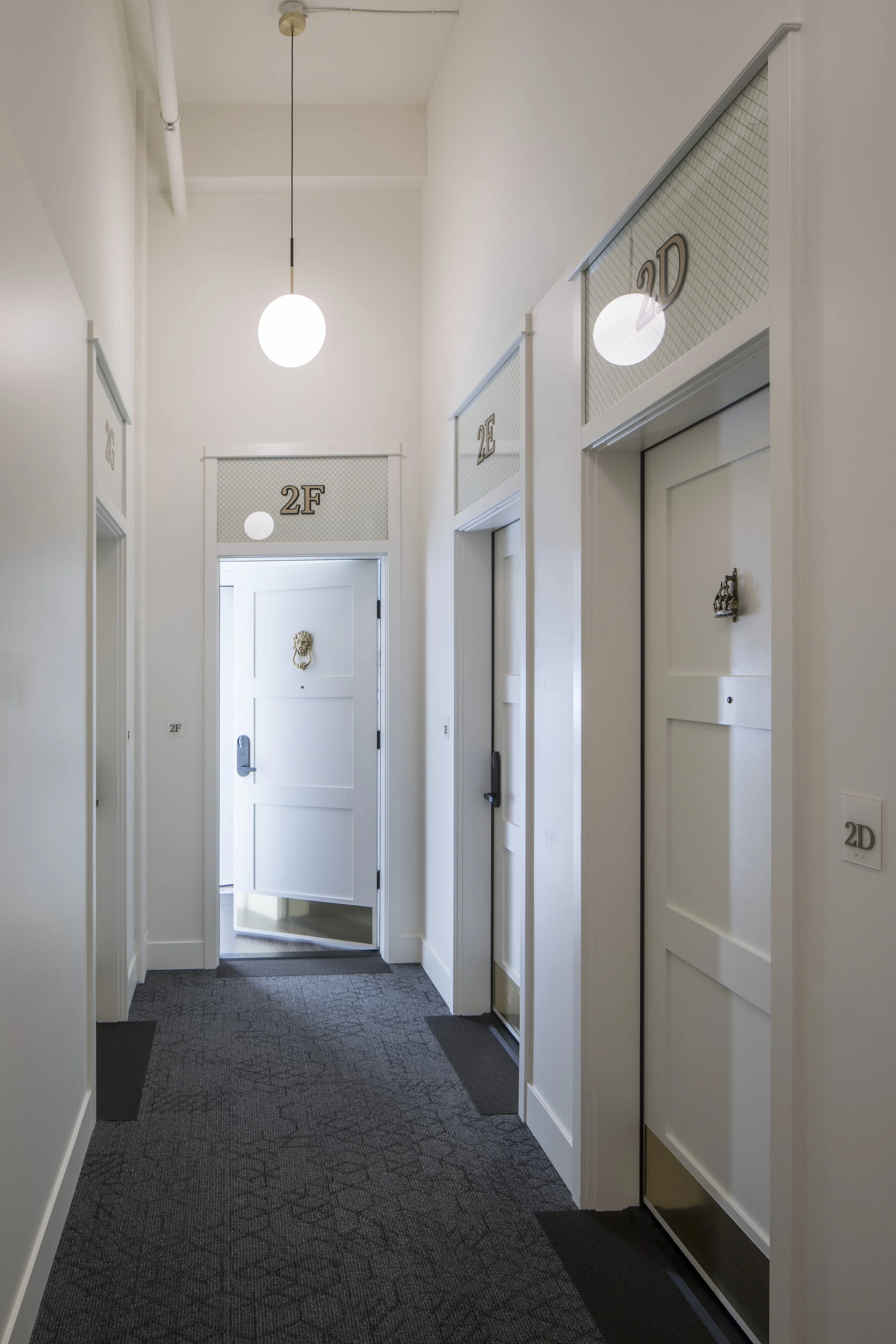
Corridor at the Queen Anne Exchange apartments. Photo: Lara Swimmer Photography.
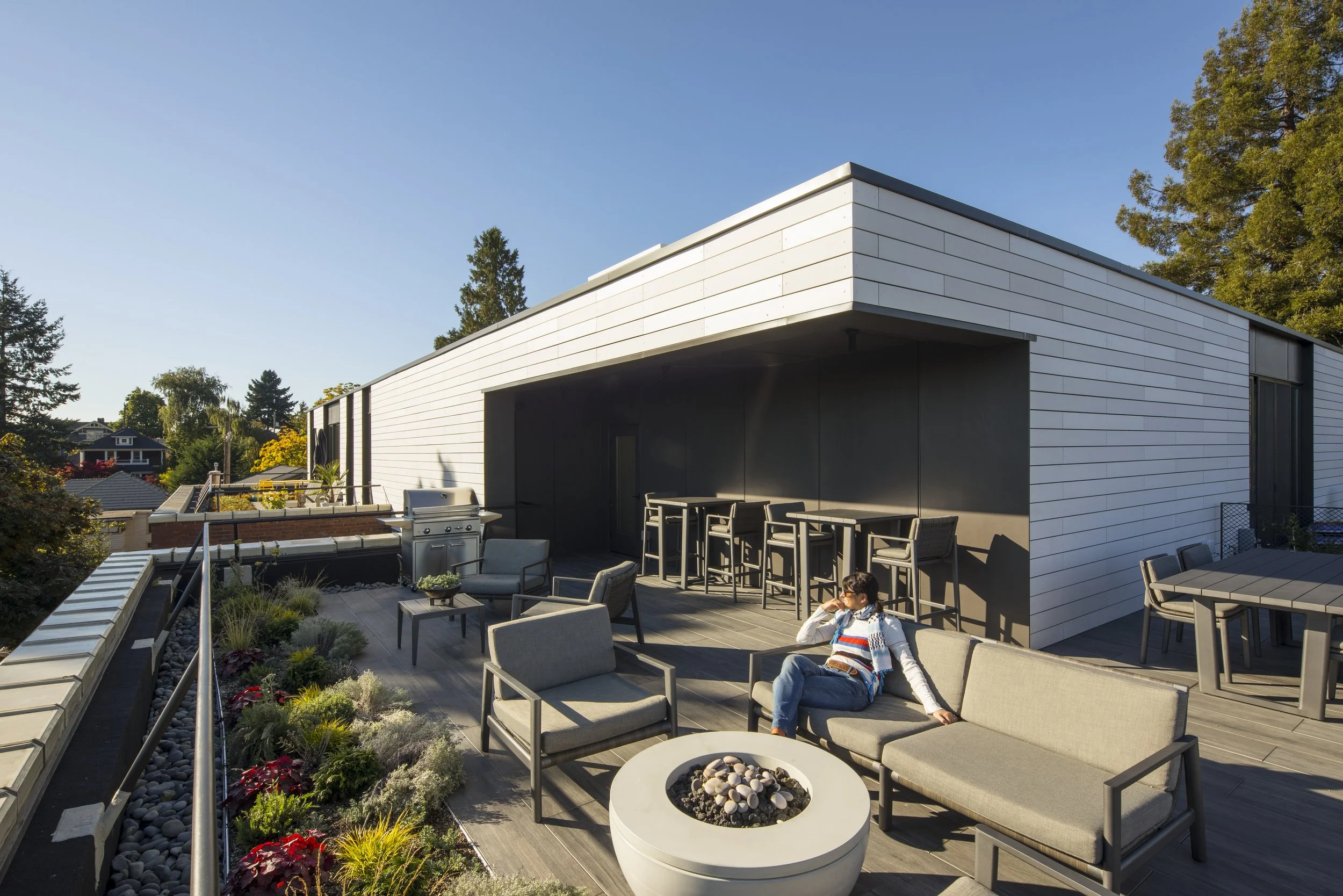
Community roof terrace of the Queen Anne Exchange. Photo: Lara Swimmer Photography.
The second is Labour Temple at 2800 1st Avenue in Belltown. Built in 1942 as a union hall, the building is a 40,000-square-foot Art Deco landmark and one of the few remaining examples of that style still in active public use in Seattle. The restoration wasn't about converting the building to something new so much as revealing what it had always been capable of. The Card Room, the Radiator Room, the Reading Room — brought back to life as event venues, coworking commons, and meeting rooms. A recording studio now occupies one corner; private offices line the upper floors. One of my favorite details: the original cast iron radiators were retained and repositioned as a design feature in the Radiator Room, a nod to the building's industrial past that visitors notice immediately. Wherever historic character could be preserved, it was.
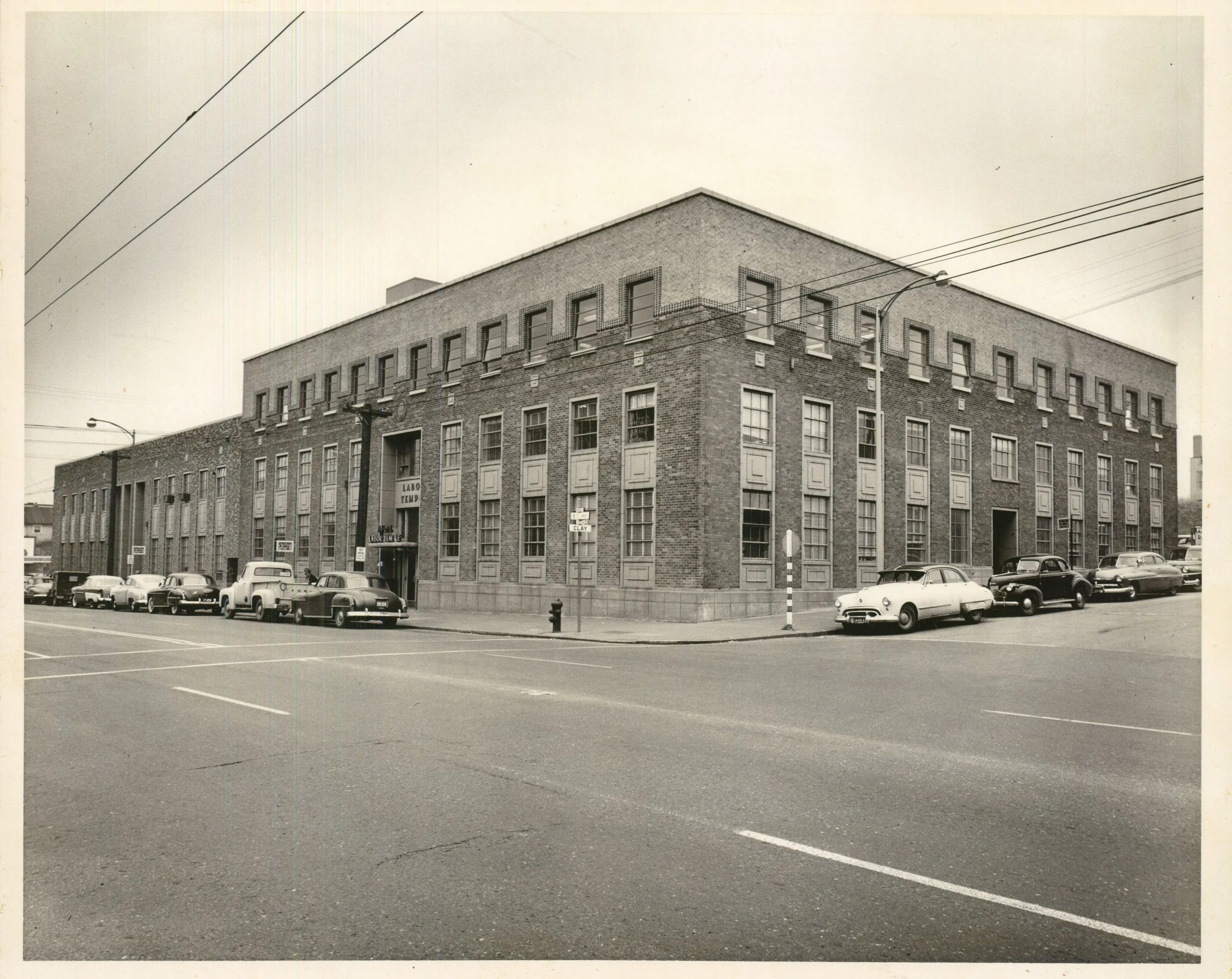
Seattle Labour Temple, 1955. Photo: Historic Seattle.
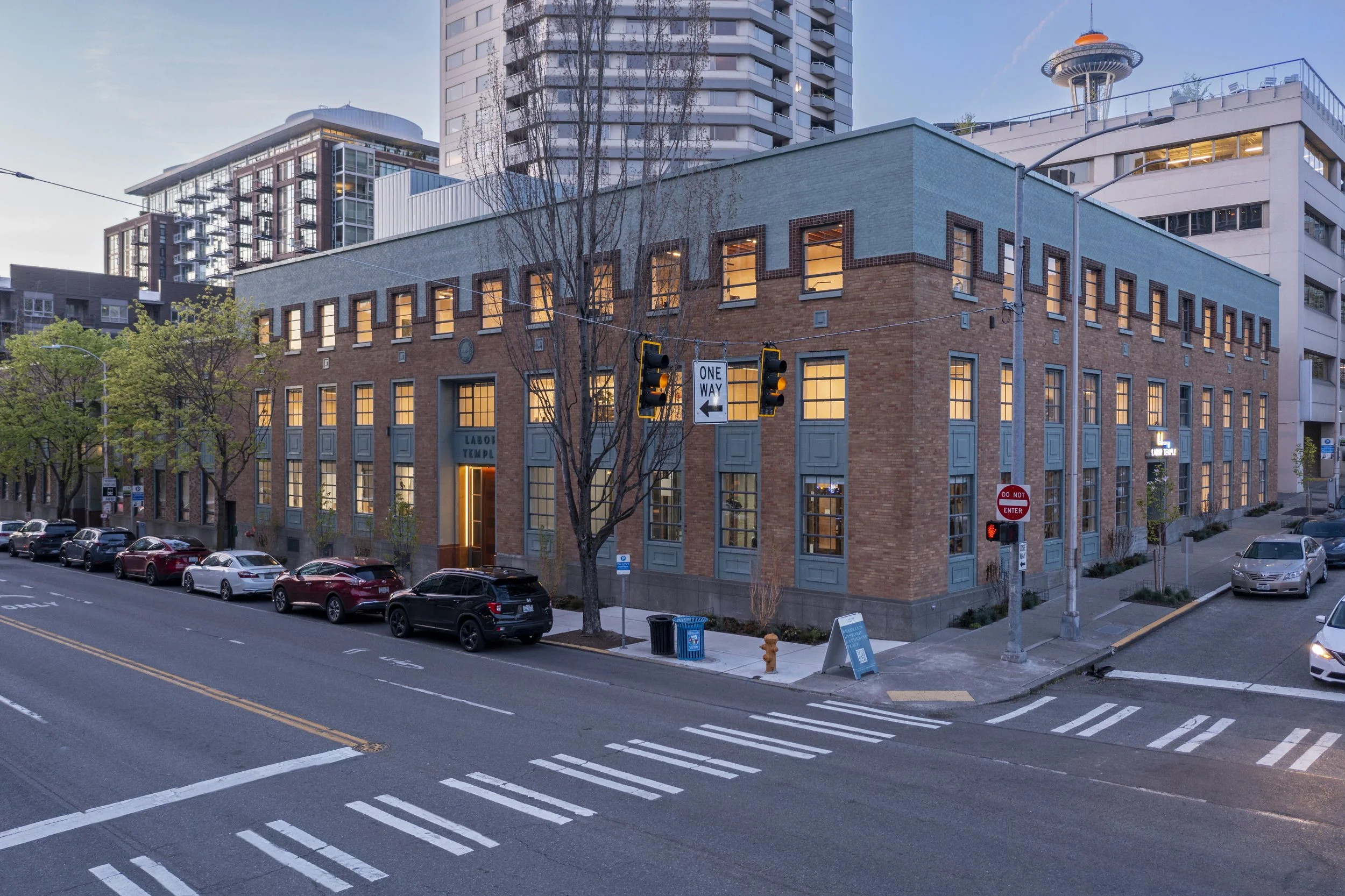
Labour Temple, 2800 1st Avenue. Photo: Evan Parker Photography.
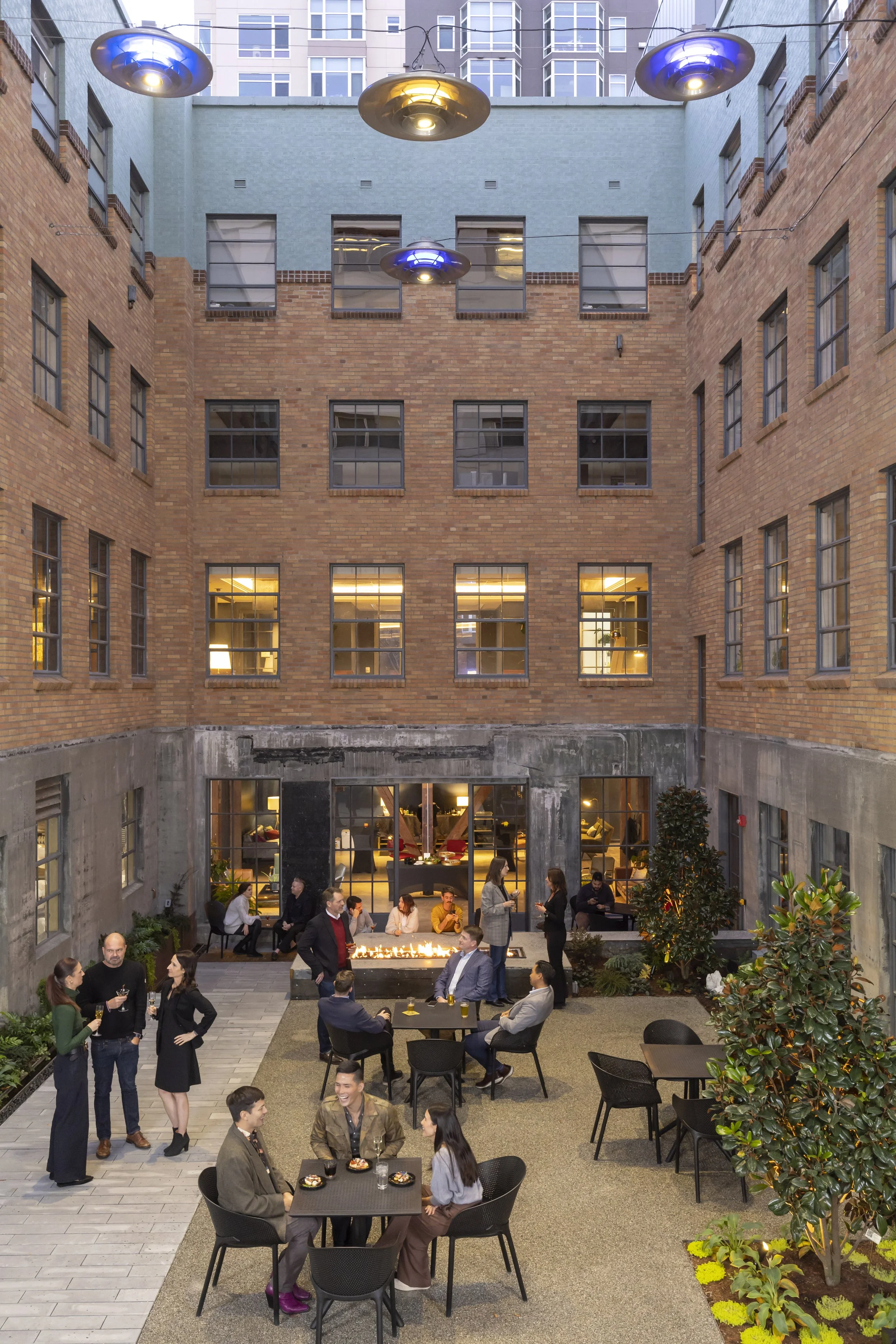
The courtyard of the Labour Temple. Photo: Evan Parker Photography.
What both projects taught me is that the central challenge of adaptive reuse isn't structural — it's editorial. You are constantly deciding what to amplify, what to leave alone, and what to quietly retire. Modern systems — HVAC, electrical, accessibility — have to be threaded through historic envelopes without announcing themselves. New additions have to earn their place without crowding out the original.
I've started thinking of “modern scale” not as a term from the preservation handbook, but as shorthand for a discipline: knowing how much is enough — how much new program, how much intervention, how much visibility. The alternative is easy to spot: a glass tower where a warehouse once stood, a new wing that overwhelms its host. That kind of scale is hard to undo. The quieter kind — the kind that lets a 1921 telephone exchange become a home people genuinely want to live in, or a 1942 union hall feel, eighty years later, like the most interesting place to work in the city — takes patience and restraint.
Seattle has no shortage of historic buildings that deserve exactly that.
